Monday, 11 August 2008

Dominus Vobiscum

Latin Mass at St. John the Evangelist On Friday, I just so happened to re-read an article that I had posted on my website some time ago, Rod Dreher’s “Latin mass as stumbling block?” While I’ve always been interested in attending Latin Mass — and have even gone to some on occasion at St. Matthew’s Cathedral in Washington DC — I didn’t know much about them, or their histories.

A quick read of the Traditional Catholic Directory PDF keyed me in on the various decrees, contrasts, etiquette, history, politics, and locations of the Traditional Catholic Mass, also known as the Tridentine Mass. As it turns out, the Latin Mass that I’ve been attending at St. Matthew’s is the Novus Ordo, that is, the Mass promulgated by Paul VI in 1969, after the Second Vatican Council. The fact that it’s shrouded in Latin doesn’t change the fact that it’s the revised Mass that did away with many Catholic traditions and became more ecumenical and charismatic. I grew up attending a liberal, charismatic Catholic church and I naturally thought of it as “normal”, knowing no other way of celebrating Mass.

After moving to Silver Spring in 2005, I started attending St. John the Evangelist parish, which is but a five minute walk from my doorstep. I quickly noticed how orthodox everything was. Masses were centered more on the fundamentals and less on making the congregation “feel good”.

Looking back, Mass at my old charismatic church was akin to a town hall meeting, with all the shaking hands, smiling, and welcoming that we were encouraged to participate in. And, given the fact that the Pastoral Council tried to shoehorn large helpings of ecumenicism and multiculturalism into every Mass, I ended up spending many Sunday mornings relearning many Catholic (and Protestant!) hymns and responses in Spanish, Tagalog, Swahili, or whatever else they happened to throw at us. This approach may be appealing to many people, but deep down, I longed for something more quiet and more reverent that I knew had to exist somewhere.

As it turns out, Traditional Latin Masses were happening right under my nose. The “Old Church” of St. John’s has been holding such Masses in conjunction with Our Lady Queen of Poland parish, which has shared the building since 1977. How this tidbit of information never reached me until now is a complete mystery. I had the fortune of attending the Mass this past Sunday; I’m sure that I’ll be attending many more. My grandparents have even expressed interest in attending as well. “It’ll be just like the olden days,” my grandmother said.

It did feel like I was going back in time. The women were wearing hats and various head-coverings, and many of the men were in suits. In fact, I felt slightly out of place in my dress slacks and long-sleeve Oxford. It was a Low Mass, so there was no singing of any kind. The only music occurred at the prelude and at the very end. The priest was “mic’ed” only during the readings and the homily, which were the only English parts of the Mass. There were long stretches of time when the priest was facing the altar and had his back to the congregation. Many of the Latin prayers were barely discernible and still more were spoken in a whisper or were simply mouthed. Communion was different as well. Instead standing in lines, congregants knelt at the gate in front of the pews, and the priest would walk back and forth, issuing the Eucharist. As congregants went back to their pews, others knelt in their place.

It was an entirely different experience — miles away from my old “quasi-charismatic” Catholic church, and the polar opposite of many mainline Protestant services/explosions. Needless to say, I felt entirely at home.

Tuesday, 5 August 2008

Whom to root for

The film Casablanca got me thinking about the way many of us “choose sides” when we watch a film with war themes. What vexes me is that one can’t always pull for a certain country — no country provides an assurance of consistency. Even the United States is not exempt from this rule, as Clint Eastwood’s complementary films Flags of Our Fathers and Letters From Iwo Jima let on.

In general, yes, one can pull for the United States — unless they’re depicted torching huts deep in the jungles of Vietnam. Pull for England/the United Kingdom, except when they’re at war with America (The Patriot) or with Scottish clans (Braveheart). France is tricky: pull for them during the French and Indian War (The Last of the Mohicans), other colonial conquests, the American Revolution, but then not during the Napoleonic wars (War and Peace, Master and Commander: The Far Side of the World). With few exceptions (the Franco-Prussian War and the Algerian War come to mind), pull for them from the middle of the 19th century onward.

Pull for Germany during the Austro-Prussian War, but not during World War I (All Quiet on the Western Front) or World War II (Saving Private Ryan). It is also permissible to root for “good” Germans (a la The Pianist and Casablanca) but only if the films make it clear that most Germans are bad. Pull for Austria, but only in the months immediately preceding the Anschluss and the subsequent occupation (The Sound of Music). Pull for Russia/USSR during the Napoleonic wars and World War II, but not during the Cold War or the Invasion of Afghanistan…

Wednesday, 23 July 2008

Found money

Since I can remember, I’ve always been fond of picking up pennies and other coins that I find on the sidewalk, in parking lots, on public floors, etc. That, coupled with the fact that I meticulously record every monetary transaction in Quicken, means that I spend an inordinate amount of time keeping track of this minute source of income.

A recent New Yorker article showed that the act of picking up pennies on the street amounts to little more than minimum wage, if extrapolated over a full hour. Still, there’s a certain enjoyment in it all, even though pennies — and coins in general — are sadly on their way out. When the half-penny was discontinued in 1857, it “had significantly more purchasing power than a dime does today.” (New Yorker) If the Treasury were rational about its coin-minting policies, the penny, nickel, and dime would not be long for this world. The quarter’s days would also be numbered.

It seems as if the only real utility that coins have now is to make change during a purchase. Many people can’t even be inconvenienced to pay with coins anymore. With credit card companies encouraging that small payments be made with cards, the perceived inconvenience of coins has increased.

As for me, I will continue to pick up pennies on the sidewalk as long as the U.S. Mint keeps producing them.

Sunday, 13 July 2008

Munch Dallas Brundage

Annie writes about Munch:

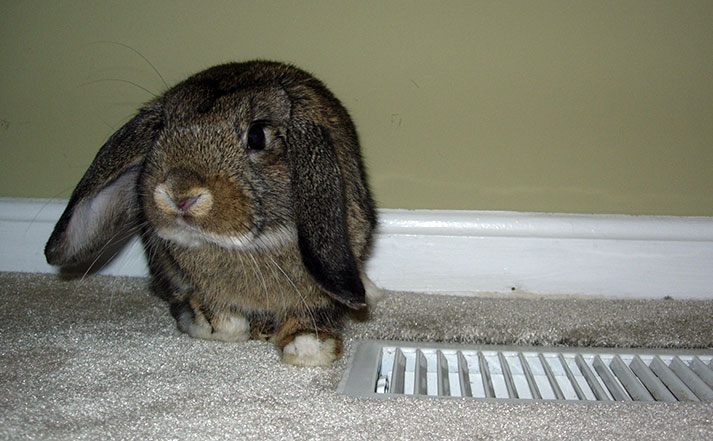
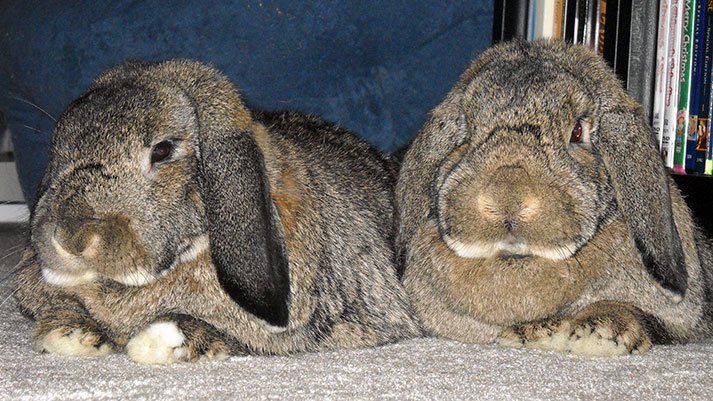
Munch, July 2008 Meet the youngest member of our family, Munch Dallas Brundage. We adopted Munch, formerly known as Dallas, from a family in Taneytown, MD last Friday. Munch is a playful nine-week-old Holland lop. He looks nearly identical to Sniff, but is currently a third of his size.

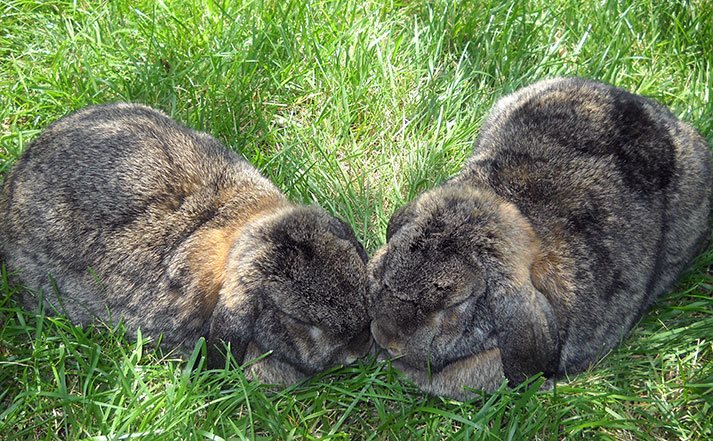
They both live rent-free in the storage room adjacent to the kitchen :-) Their spaces are divided by a wire barrier and they both have free run of the kitchen. They can see and sniff each other but do not have full contact unless they are being supervised in the living room/dining room.

On Munch’s first day home, the two weren’t formally introduced until after nine hours of curiously sniffing each other through the wire barrier. Most of the time, Sniff ignores Munch unless Munch tries to snuggle his belly. Sniff — not having had any contact with other bunnies (except for wild bunnies from afar) and is normally afraid of things such as falling leaves — probably gets scared and attacks. Although Munch is only a third of his size, he doesn’t always let Sniffie win. He’s a little fireball! Munch takes every opportunity to snuggle up to Sniffie, however, with the same results.

The only time that they don’t fight is when Sniff snuggles up to my feet for a petting. Munch follows suit and snuggles up next to him to get a simultaneous petting. I turn their noses toward each other and continue petting them. This always goes well and is a good sign.

Most of the time, Munch — being true to his name — munches away on various veggies and goodies. He has an extremely healthy appetite for such a little guy. He’s very curious, playful, and friendly. He’s also a “lap lop.” Even Matt, who could never once hold Sniffie is his lap, manages to snuggle with Munch. This one is definitely Daddy’s little boy.

-Annie Brundage

FYI, Munch is named in honor of the rabbit belonging to Firefox evangelist Asa Dotzler.

Saturday, 12 July 2008

This could be you

The music world is now almost a decade removed from the pop-punk, “alternative”, and mainstream grunge of the ’90s. With that in mind, Virginia outfit No Compromise adds a healthy dose of nostalgia to both their live shows and their latest release, This Could Be You.

No Compromise is a classic rock band, in the loosest sense of the phrase. This Could Be You builds on that reputation, compressing the best of ’90s rock into seven tracks, while still managing to sound fresh. Standout track “Whatever It Takes” is full-on 1994/95-era Foo Fighters with scalpel-sharp guitar work from Jack Kwait-Blank and enough energy to tide them over for the rest of the album. Lead single “Love, Myself” is catchy and works in part because of a two-part harmony that pops up in a couple of places. Additionally, listen for it in the chorus of last year’s “Seams So Seamless”. It sounds appealing, but is vastly underutilized.

No Compromise at the State Theatre on July 11, 2008 Their overall sound is pleasing. Think of a downtuned, grungier Jimmy Eat World without Auto-Tune, circa 2000. Altogether radio-friendly, the band takes another step forward, production-wise, with keyboards on “Rain Over Washington” and “The Only One Left” and subtle vocal effects (and perhaps double-tracking?) on the plodding “Cybernoia”. In the right hands, the track “Restless” could have hypothetically devolved into an all-out hardcore grungefest the likes of which Korn has never heard. If NoCo gets picked up by a label, I wouldn’t be surprised if “Restless” gets a makeover.

No Compromise played the State Theatre in Falls Church, VA last night and the relatively high quality of the venue’s PA system really “opened up” NoCo’s sound, as if a layer of dust had been squeegeed off. The trio fit in quite nicely alongside unsigned group Redshift and established local band The Blackjacks. Again, Jack Kwait-Blank’s versatile guitar work anchored the performance — at times channeling Billy Corgan, at other times even Dave Grohl or Al Pitrelli — sometimes all within the same song. William Bowen pounded the drums with a style that, for some reason, reminded me of Slowhand. The sticks appeared to be hitting the skins just in the nick of time. Thrilling to watch, to say the least. Bassist and lead singer Justin Fry was energetic and employed fuzz effects at times, essentially playing rhythm during Kwait-Blank’s solos. Or perhaps it was just my imagination.

Tuesday, 8 July 2008

Fleet Foxes at the Black Cat

Fleet Foxes at the Black Cat, July 7, 2008 The hype surrounding Seattle new-comers Fleet Foxes is altogether warranted. After receiving excellent reviews for their self-titled debut album (released June 3), they suddenly became the band to see.

Their performance last night at the Black Cat did not disappoint, although the band was not in full form. Lead vocalist and songwriter Robin Pecknold excused his singing with tales of a cold that has lasted for weeks; he even claimed that those in attendance were being “half-conned” out of their money. To the contrary, his vocals were more or less spot-on, save for a time or two when I could detect some cracking. I was hoping that it would hold up during the a capella numbers, and thankfully, it did. I recall thinking that, “presently, I’ve forgotten what all other voices sound like, and frankly, I don’t care.” They have that good of a blend — Robin’s voice in particular. Their harmonies are tight, high, and wispy, with no apparent bass sound. At times, it sounded as if Pecknold were singing two or three parts simultaneously.

The set started off quiet and subdued. The sold-out crowd became hushed, and no one dared flash their camera. For a while, the audience failed to clap between songs — I’m guessing that we were just awestruck. It’s as if we were about to applaud in church after a particularly eloquent Latin chorale piece. It not something that one does without serious contemplation. Eventually, the mood lightened a bit and the audience was as enthusiastic as ever.

Come down from the mountain; you have been gone too long
The spring is upon us; follow my only song
Settle down with me by the fire of my young love…

The only sour note was the exclusion of quite possibly their most accomplished piece, “Ragged Wood”, a song that evokes a “woodsy” sound — a style recently employed by My Morning Jacket, Band of Horses, and Midlake, among others. I kept waiting for it, but it never came (contrary to what NPR claims). At the encore, I had one last glimmer of hope, but it just wasn’t meant to be.

As some may know, Josh Tillman is now Fleet Foxes’ drummer, having joined the group in early 2008. I knew Josh back when we were in our teens. We attended the same high school for a few years; he was a grade below me. I told him after the show that I had never set out to find him or his music — his music simply found me over the normal course of events. I started listening to his solo albums and EPs a few years ago; I have a feeling that I’d still be a fan even if we had never had that personal connection back in high school. Seeing him drum for Fleet Foxes was almost surreal, and he has a fine voice as well. I have a feeling that even better things are in store for him and his band.

NPR has a write-up and streaming audio of the show.

Tuesday, 1 July 2008

Our political environments

Lately, I’ve been wondering to what extent my political worldview was influenced by my parents and my environment when I was a child. Are my beliefs truly my own? Or am I simply regurgitating what I happened to soak in during my formative years? The same set of questions can be asked of anyone with political opinions: is what you believe truly “original”?

I see three possible outcomes, with the first two being the most likely:

  • Opinions are formed by childhood indoctrination — the environment — with little or no resistance by the subject
  • Opinions come as a direct result of rebellion (typically in the teen years). The subject ends up having opinions at odds with those of his environment.
  • The subject forms opinions objectively — with scant indoctrination during the formative years. In this case, the subject’s environment has little or no effect on the subject’s worldview, either positively or negatively.

Rarely is the third outcome given as a explanation of why someone has certain political beliefs. If his environment propagated similar worldviews, then it is likewise credited. But if his environment had dissimilar worldviews, then the subject must have rebelled.

Sunday, 22 June 2008

Food and the general state of things

weight Just when I thought it was safe to eat healthy again, Annie goes to the store and brings back two large containers of ice cream, at least two packages of Pepperidge Farm cookies, a dozen doughnuts, tea cookies, chocolate chip cookies, brownies (with sprinkles), spicy hot potato chips, Boboli pizza dough, two four-packs of Starbucks Frappuccinos, and Lord knows what else. Add to that my new affinity toward Dagoba dark chocolate and Jiff peanut butter — and Annie’s propensity toward putting those bite-size chocolate morsels and Reese’s peanut butter cups in little bowls in the living room — it’s a wonder that my body hasn’t completely gone to seed.

On the bright side, at long last my weight now starts with a “1″ instead of a “2″ (well, at least for this week), so I must be doing something right. Let’s see how long it lasts. Here’s another meaningless graphic for those of you who enjoy such things…

Friday, 13 June 2008

This post best viewed…

  • …in a browser. Ideal specimens, in descending order, are Firefox 3, Opera 9.5, Safari 3.1, Firefox 2, IE7. Browser chrome should be optimized to increase viewable page area. Application(s) should — naturally — be maximized.
  • …with an operating system released this decade on a PC manufactured after 2003. An Internet connection speed of at least 200kbps. Memory of at least 512mb. A system not infected with viruses or spyware.
  • …with a minimum screen resolution of 1024×768, although 800×600 is still unofficially supported.
  • …on a computer monitor with a contrast ratio of at least 600×1, at least 80 candelas per square meter (nits), and an ambient correlated color temperature of approximately 5000K. Ideal monitor connections are, in descending order, HDMI, Display Port, DVI, and VGA. Additionally, other factors will affect viewing, including proper visual perception and adequate room lighting (indirect natural sunlight and/or shielded halogens are recommended).

Additionally, readers should possess a strong command of the English language and should have the ability to detect such subtleties as irony, parody, and attempts at wry humor. Reading this post while under extreme mental anguish or substantial physical pain is not recommended.

Tuesday, 3 June 2008

My City Was Gone

Medium Image The Pretenders’ “My City Was Gone“, known as the bumper music with the killer bass line on Rush Limbaugh’s radio show, has typically been viewed as a protest song: focused on then-president Ronald Reagan’s economic policies. Between the lines, Pretenders’ singer Chrissie Hynde argues that Reagan’s policies (the “government”) contributed to the mall culture in middle America — whereby bedroom communities and open spaces are replaced with big box stores, fast food joints, off-ramps, and strip malls. While there is some validity in protesting against the homogenization of American culture, Hynde’s anger may have been misdirected. Let’s examine if Reagan could have contributed to the injustices that Hynde rails against:

The Budget process of the United States government states that the president shall submit a budget proposal to congress, who will then approve and/or modify the proposal. Reagan’s first budget request was for fiscal year 1982, which started on October 1, 1981.

Since “My City Was Gone” first appeared on wax in October 1982, Hynde only had a small window by which to pen the supposedly anti-Reagan lyrics. Reagan didn’t even take office until January 1981, and his budget wasn’t effective until October of that year. I seriously question the influence that Reagan (and the gridlocked 97th congress) had on new construction contracts in Akron, Ohio between October 1981 and the day that Hynde wrote “My City Was Gone”. For the sake of argument, let’s say spring 1982, although it could have been much earlier. Various sources indicate that the song was written before the death of The Pretenders’ guitarist James Honeyman-Scott which occurred in June of 1982.

In reality, Hynde is lamenting that her Ohio isn’t the Ohio she knew when she was younger. In a perfect world, there should have been a moratorium on all real estate development in Akron, Ohio in 1973 — the year Hynde left for London. It’s becoming apparent that Hynde is railing not only against development and change, but against capitalism and the market economy itself.